Claude Sonnet 4.6 drops with 1M context, 15-point perf jump, and GitHub Copilot integration
Claude Sonnet 4.6 ships with 1M context and Copilot integration. Kimi K2.5 undercuts on speed and price. Supabase acquires Hydra for Postgres analytics.
Good morning and welcome to the Builder's Briefing for February 18th, 2026. I'm Alex, here with Sam, and wow — today is packed. We've got a major Anthropic drop, a scrappy challenger model that's absurdly cheap, and the agentic coding stack is really starting to crystallize.
Yeah, this is one of those days where you look at the news and realize the tools we're building with are shifting underneath us in real time. Let's get into it.
Alright, the big story. Anthropic shipped Claude Sonnet 4.6 yesterday — a fifteen-point improvement on complex work evaluations over the previous version, a one million token context window, and it's live in GitHub Copilot right now at standard premium pricing. No surcharge.
That's a big deal — especially the Copilot integration on day one. Usually there's a lag before new models show up in third-party tools. This feels like Anthropic is really trying to be the default for developers who ship code every day.
Exactly. And it wasn't just the model. They also GA'd code execution, memory, and tool search in the Claude API, plus added dynamic filtering for web search. So this is a coordinated platform push — better model, better tooling, broader distribution, all at once.
Right, and what's wild is the practical implication. If you're building on the API, one million tokens of context plus code execution plus web search means you can point an agent at an entire codebase and pull live data in a single workflow. No stitching together three different services.
If you're using Copilot, honestly just switch to Sonnet 4.6 today and test it. The agentic coding improvements are real.
Agreed. Though I will say — there's competition nipping at their heels, which brings us to the next story.
So Kimi K2.5 — DHH posted a side-by-side showing it fixing a bug in twenty-one seconds versus Claude's three minutes. And the cost? Roughly zero point three cents per million tokens. You could run three million tokens for under ten bucks.
That's insane. Like, for high-volume agentic loops where you don't need peak reasoning — just fast, cheap task completion — that could cut your inference bill by ninety percent or more. Not everything needs the smartest model in the room.
Right, and this is the market dynamic to watch. Anthropic competing on developer experience and capability at the top, while models like Kimi K2.5 are commoditizing the bottom end at speeds that are hard to ignore.
It's the classic stratification. Premium reasoning versus commodity execution. Smart teams are going to route different tasks to different models. That's just good engineering.
A couple other model drops worth mentioning. Cohere released Tiny Aya — a three point three five billion parameter multilingual model covering over seventy languages. Open source, small enough to run on modest hardware.
That's huge for anyone building for non-English markets. Languages in Africa, Southeast Asia, the Middle East — areas where bigger models just don't perform well. And no API dependency, you can run it yourself.
Also, Kling 3.0 landed on Replicate — 4K multi-shot video generation with audio, up to fifteen-second clips, all API-accessible. If you've been building video features, worth benchmarking against Runway or Pika.
Okay, shifting to developer tools. The Next.js team published agent-first design principles and an MCP integration guide, and I think this one is sneakily important.
This is the one that made me sit up. They're basically saying: your next power user isn't a person clicking through your UI, it's a coding agent with an MCP connection. So design your app accordingly — structured outputs, agent-friendly routing, the whole nine yards.
And that ties into the Claude for Excel news too — the Excel add-in now pipes in financial data from S&P, FactSet, PitchBook, and more via MCP. MCP is becoming the real integration layer for enterprise data. It's not just a dev toy anymore.
The through line is clear. MCP is the connective tissue for this whole agentic stack.
Two more quick ones on the tools front. Linear shipped a Cursor plugin — you can pull issues, update status, manage tasks without leaving the IDE. And there's a trending GitHub repo called obra slash superpowers — an agentic skills framework with thirty-six hundred stars. It's like a structured playbook for how teams should work with coding agents.
The Linear-Cursor thing is perfect. That's the IDE-as-hub trend continuing. You never leave your editor. And superpowers — I've been looking at that — it's the closest thing to a 'here's how we actually work now' methodology guide for AI-augmented teams.
Oh, and there's a new arxiv paper asking whether AGENTS.md files actually help coding agents. The Hacker News discussion had mixed results.
Ha — so maybe don't spend your whole Saturday crafting the perfect AGENTS.md just yet. Read the paper first. Link in the briefing.
Alright, infrastructure. Supabase made two moves. First, they acquired the Hydra team, which means they're getting pg_duckdb — the plan is to let you run analytical queries directly in Postgres without shipping data to a separate warehouse.
That's interesting because it kills a whole category of ETL pipelines. If you're on Supabase and you've been piping data out to BigQuery or Snowflake just for analytics, that pain might just go away.
And second, they turned on Row Level Security by default on new tables created via the dashboard. Small change, massive impact. That was the most common security footgun — devs forgetting to enable RLS and accidentally exposing data.
Secure by default. Love it. That's the kind of change that prevents incidents you never even hear about.
Quick hits to close us out. Google I/O is confirmed for May 19th — mark your calendars. BarraCUDA is an open-source CUDA compiler that targets AMD GPUs, so you can run CUDA code on AMD hardware without rewriting it. And there's a new open-source voice-to-text tool called FreeFlow as an alternative to Wispr Flow.
BarraCUDA is one to watch. If you're priced out of NVIDIA or want AMD as a fallback for inference, that's a real lifeline. Active discussion on Hacker News about real-world viability — link in the briefing.
So the takeaway for today — the agentic coding stack is crystallizing fast. Sonnet 4.6 in Copilot, Linear in Cursor, superpowers as methodology, MCP as the integration layer. If you're building developer tools, design for agent consumption first.
And if you're running high-volume agent loops, seriously benchmark Kimi K2.5 against whatever you're using now. At three tenths of a cent per million tokens and eight times the speed on simple tasks, you might be leaving a lot of money on the table.
Your next power user isn't a human with a browser — it's a coding agent with an MCP connection. Build for that world. That's the Builder's Briefing for February 18th. All the links and details are in the show notes.
Go switch Copilot to Sonnet 4.6, benchmark Kimi, and read that Next.js agent guide. Plenty to build on this week. See you tomorrow!
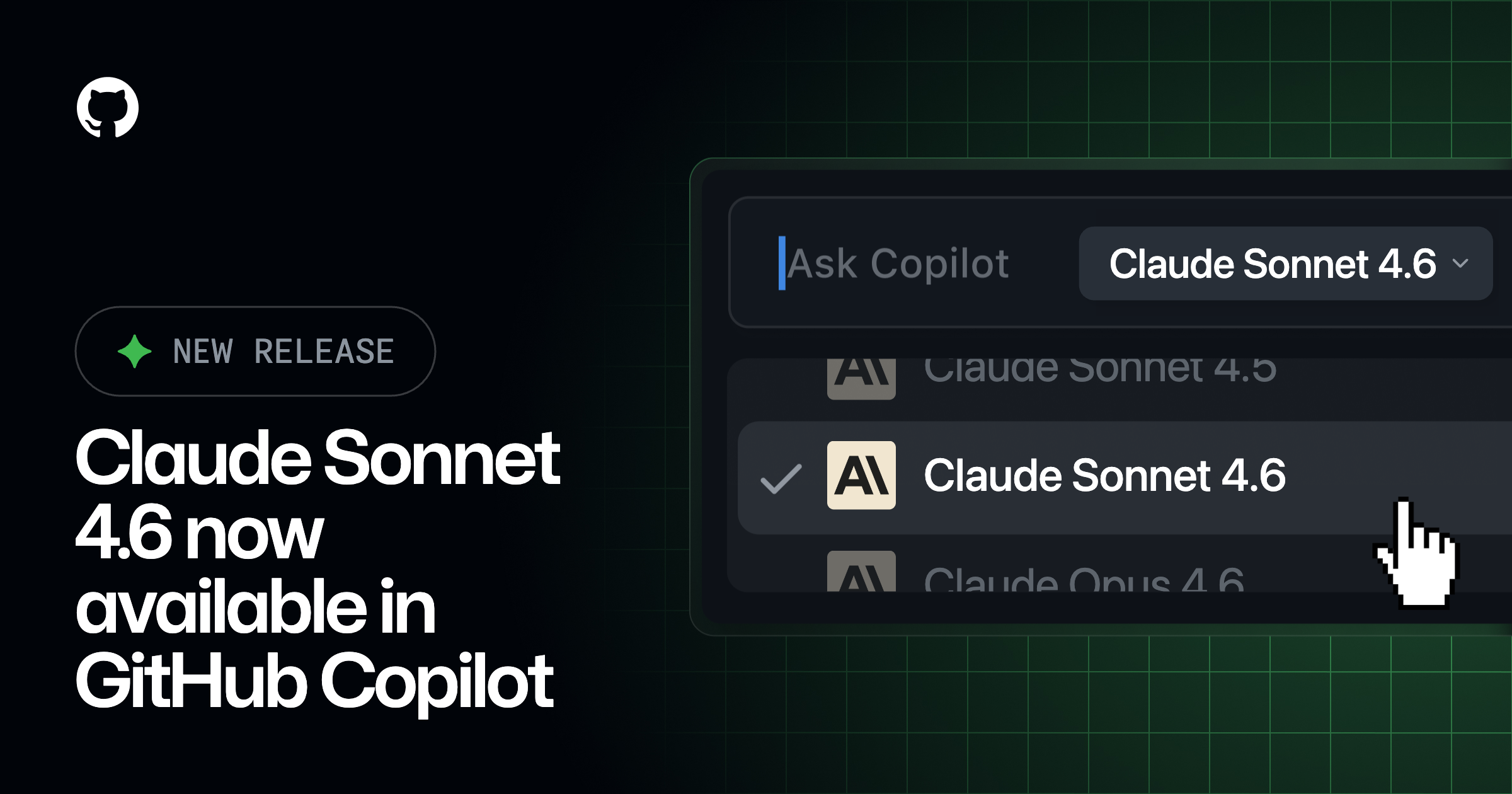
Anthropic shipped Claude Sonnet 4.6 yesterday, and the numbers matter: a 15-point improvement on complex work evaluations over its predecessor, a 1M token context window, and immediate availability in GitHub Copilot at 1x premium pricing (no surcharge). The model is live in the API right now. Alongside the model launch, Anthropic also GA'd code execution, memory, and tool search in the Claude API, plus added dynamic filtering for web search that uses code execution under the hood. This is a coordinated platform push — better model, better tooling, broader distribution.
For builders, the practical upside is concrete. If you're using Copilot, switch to Sonnet 4.6 and test it on your codebase today — the agentic coding improvements plus strong search capabilities make it the most capable mid-tier option in the Copilot model picker. If you're building on the API, the combination of 1M context + GA code execution + web search filtering means you can build agents that process entire codebases and pull live data in a single workflow without stitching together separate services.
The signal for the next 6 months: Anthropic is competing hard on the developer experience layer, not just benchmarks. GA'ing tools alongside the model drop, landing in GitHub Copilot on day one — this is about making Claude the default for builders who ship. Meanwhile, Kimi K2.5 is nipping at their heels on speed and cost (DHH clocked it fixing a bug in 21 seconds vs. Claude's 3 minutes, at $0.003/M tokens). The mid-tier model market is about to get very competitive very fast.
Kimi K2.5 is absurdly fast and absurdly cheap — 3M tokens for under $10
DHH posted a side-by-side showing Kimi K2.5 fixing a bug in 21 seconds vs. Claude's 3 minutes, at roughly $0.003 per million tokens via OpenCode Zen. If you're running high-volume agentic loops where speed and cost matter more than peak reasoning, this is worth benchmarking against your workload immediately.
Claude for Excel gets MCP connectors for S&P, FactSet, PitchBook, and more
The Excel add-in now pipes in financial data from six major providers via MCP. If you're building fintech tools or internal dashboards, this is the signal that MCP is becoming the real integration layer for enterprise data — not just a dev toy.
Cohere releases Tiny Aya: 3.35B multilingual model covering 70+ languages
Open-source, small enough to run on modest hardware, and covers languages that larger models handle poorly. If you're building for non-English markets — especially in Africa, Southeast Asia, or the Middle East — this is the most practical on-ramp for multilingual features without API dependency.
Kling 3.0 lands on Replicate: 4K multi-shot video with audio, 15s clips
4K video generation with style transfer and audio is now API-accessible on Replicate. If you've been building video features with Runway or Pika, test this — the multi-shot coherence and audio integration could simplify your pipeline significantly.
Next.js publishes agent-first design principles and MCP integration guide
The Next.js team laid out their architecture recommendations for building apps that AI agents can use — MCP integration, structured outputs, agent-friendly routing. If you're building a SaaS product, this is worth reading now because your users' AI agents are about to become your API consumers.
obra/superpowers: An agentic skills framework trending hard on GitHub
With 3,600+ stars, this framework codifies a methodology for building with coding agents — think structured prompting patterns and skill decomposition. If you're managing a team that ships with AI agents, this is the most practical "how we work now" playbook currently available.
Linear ships a Cursor plugin for in-IDE project management
You can now pull Linear issues, update status, and manage tasks without leaving Cursor. This is the IDE-as-hub trend continuing — if your team uses Linear + Cursor, turn it on today.
Research: Do AGENTS.md files actually help coding agents?
New arxiv paper evaluates whether project-level instruction files improve agent performance. The HN discussion (58 points, 17 comments) suggests mixed results — worth reading before you spend a day crafting the perfect AGENTS.md for your repo.
OpenAI Codex terminal agent hits 950 stars on GitHub
Lightweight terminal-based coding agent from OpenAI. If you want an agentic coding flow without IDE lock-in, this is a clean starting point that plays well with existing CLI workflows.
Go's 'go fix' gets a deep dive for automated code modernization
Official Go blog post walks through using go fix to mechanically update your codebase to modern idioms. If you maintain a Go project, this is free tech debt reduction — run it on your CI pipeline.
BarraCUDA: Open-source CUDA compiler targeting AMD GPUs
Run CUDA code on AMD hardware without rewriting it. If you're priced out of NVIDIA GPUs or want AMD as a fallback for inference, this is the project to watch — 117 points on HN with active discussion on real-world viability.
Async/Await on the GPU — new programming model for GPU workloads
Vectorware's blog post lays out how async/await patterns can work for GPU compute. If you're writing custom CUDA kernels or building inference infrastructure, this could reshape how you think about GPU task scheduling.
Testing Postgres race conditions with synchronization barriers
Practical technique for reproducing and testing concurrent access bugs in Postgres. If you've ever shipped a "works on my machine" fix for a race condition, this approach gives you deterministic reproduction in your test suite.
Supabase acquires Hydra team, gets pg_duckdb for Postgres analytics
The pg_duckdb maintainers are now at Supabase building an "Open Warehouse Architecture." If you're using Supabase and piping data to a separate analytics warehouse, this acquisition means you'll eventually be able to run analytical queries directly in Postgres — killing a whole category of ETL pipelines.
Supabase enables Row Level Security by default on new tables
New tables created via the dashboard now have RLS enabled automatically. Small change, big impact — this eliminates the most common Supabase security footgun where devs forget to enable RLS and accidentally expose data.
Turso ships as an in-process SQLite-compatible database on GitHub
If you want embedded SQLite with replication and branching, Turso's open-source repo is trending. Worth evaluating if you're building local-first apps or need edge-compatible SQL.
dev/agents exits stealth as Dreamer — full-stack coding agent
New coding agent startup announced by swyx. Another entrant in the crowded agentic coding space, but the full-stack approach (not just code completion) is the direction the market is moving. Worth watching to see if they differentiate on execution quality.
Bria's video background removal model goes live on Replicate
Production-ready video background removal via API. If you're building video editing features or real-time video apps, this saves you from running your own segmentation model.
The agentic coding stack is crystallizing fast: Sonnet 4.6 in Copilot, Linear in Cursor, obra/superpowers as methodology, AGENTS.md under academic scrutiny. If you're building developer tools, design for agent consumption first (see the Next.js MCP guide) — your next power user isn't a human with a browser, it's a coding agent with an MCP connection. And if you're running high-volume agent loops, benchmark Kimi K2.5 against your current model — at $0.003/M tokens and 8x speed improvement over Claude on simple tasks, it could cut your inference bill by 90%+ on the commodity end of your workload.