Meta's expensive GPUs were sitting idle, waiting on storage. This week two of AI's biggest builders showed the same thing: the model and the chip are the cheap part now
Two of AI's biggest builders spent this week showing the same thing from opposite ends of the stack: the model and the GPU are the cheap part now, and the value moved into the systems around them. Meta rebuilt its storage layer to stop GPUs sitting idle, cutting dataset loads from about 150 minutes to 10; OpenAI's Codex team teased GPT-5.6 Sol Ultra, whose benchmark gain comes from cooperating subagents rather than a smarter base model. Plus American Blackwell wafers that still fly to Taiwan for packaging, and another Texas power mega-campus.
It's Monday, July sixth. The wire spent all week telling you capable AI got cheap and portable. Today two of the biggest builders in the business showed you where the money actually went.
Off the model, and off the chip. Here's the rundown: why Meta's most expensive hardware was sitting idle, why OpenAI's new Codex tier is really a swarm of subagents, and what both say about where the margin lives now.
Start with Meta. It published the engineering behind a problem most AI teams would rather not admit they have: some of the most expensive hardware on the planet, idle, waiting for a file.
The GPUs kept stalling between training steps because the storage underneath them was too slow to serve the data. So Meta rebuilt the whole layer. One fast metadata index, bytes streamed straight to the client, and the data moved into the same region as the chips.
And the numbers are the story. Loading a training set went from about a hundred and fifty minutes down to ten. The worst long-tail job went from eighty-nine hours to a hundred and eighty-two minutes.
An idle GPU is the most expensive line in an AI budget. You pay for the silicon and the power whether it's computing or just standing around.
So the scarce thing here was never the accelerator. It was the plumbing that keeps it busy. That's our briefing's read on the week: the chip stopped being the bottleneck a while ago.
Now go up one layer, into software, same week. Thibault Sottiaux, who runs OpenAI's Codex agent, spent the weekend teasing a new tier called GPT-5.6 Sol Ultra.
And the interesting part isn't a bigger model. Ultra is a harness. It runs a swarm of subagents that actually talk to each other while they work, instead of separate agents that only compare notes at the end.
The reported score is ninety-one point nine percent on Terminal-Bench, against eighty-eight point eight for the base model. Those numbers are unofficial, so hold them loosely.
But here's the tell. The base models all cluster around eighty-eight. OpenAI's own, and Anthropic's Claude Mythos five. So the jump OpenAI is selling comes almost entirely from the orchestration. The model underneath barely moved.
Put the two together and the week has a spine. Meta rebuilt the plumbing below the chip. OpenAI is selling the orchestration above it. The model in the middle is the part anyone can rent.
And one floor down, in the physical world, the same lesson. Nvidia and Intel spent the week talking up American-made chips, and the wafers are real, coming off TSMC's Arizona line. But the packaging, the step that fuses the die to its memory, still happens in Taiwan. Independence runs out at the hardest layer.
To the tape. We're holding the Micron long from yesterday. Every infrastructure story this week routes back to memory, and analysts now put it at around thirty percent of hyperscaler AI spend.
New to the book: we're putting Amkor on watch, low conviction. They're building the advanced-packaging plant in Arizona that's supposed to close that Taiwan gap, but it isn't due until twenty twenty-eight. A name to watch, not a position.
And we're holding Nvidia on watch. Meta's storage fix is the tell we keep tracking: the next lever on cost is getting more work out of the GPUs you already own, and only then buying more.
The tape is the desk's scorecard, not advice.
Quick break — two from the desk.
One we know well: vote dot direct. If you're on an H O A or a board, it runs your elections digitally — secure, verifiable, no paper, no clipboard in the lobby. Point your council to vote dot direct.
And if this is your ten minutes of A I for the day, get the written edition too. The full wire, free, every morning — leave your email at nextbig dot dev.
Our call: within nine months, at least one more hyperscaler publicly reports a double-digit gain in GPU utilization, and credits it to rebuilding the storage or data pipeline that feeds the chips, rather than to buying more of them.
What proves us wrong: if by next April the only way anyone talks about efficiency is still buying more accelerators, and nobody but Meta ties a real utilization number to the plumbing.
The model's cheap now. The chip is close to a spot price. The expensive work moved into the systems around them, and today both Meta and OpenAI showed you exactly where. That's the rundown.
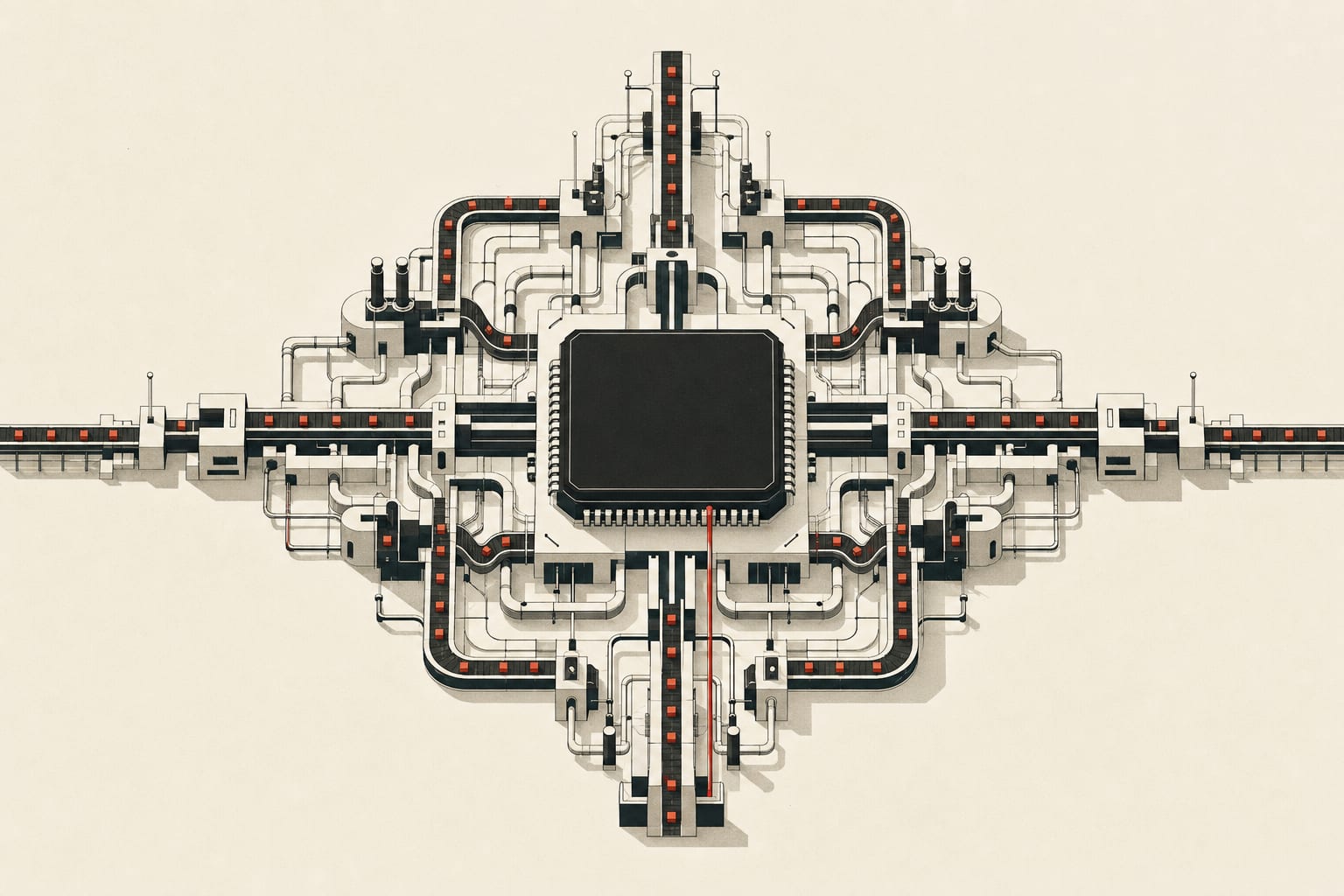
Meta just published the engineering behind a problem most AI teams would rather not admit: some of the most expensive hardware on earth, idle, waiting for a file. Its GPUs kept stalling between training steps because the storage beneath them, a BLOB layer spread across exabytes of Meta's Tectonic file system, was too slow to serve it. So Meta rebuilt it. Metadata lookups that used to chain across tiers collapsed into one fast index; clients now stream bytes straight off the storage servers; the data moved into the same region as the chips. Loading a training set fell from about 150 minutes to 10, and the worst long-tail job dropped from 89 hours to 182.
The reflex is to file this under Meta housekeeping, and the scale invites it: only a few companies on earth run exabytes of training data across regions. That skips what the numbers say. An idle GPU is the most costly line in an AI budget, because the silicon and the power bill you the same whether it computes or waits. Meta's own write-up is blunt: storage bottlenecks hit GPU utilization and cost directly, and across a geo-distributed fleet, time spent moving data is time lost doing research. The scarce input here was never the accelerator, but the plumbing that keeps it busy.
The same lesson surfaced one layer up, in software. Thibault Sottiaux, who leads OpenAI's Codex agent, spent the weekend teasing a tier, GPT-5.6 Sol Ultra, telling developers to save their hardest prompts. What he described is less a bigger model than a harness: a swarm of subagents that talk to each other while they work, where the older mode only merged independent agents at the end. OpenAI's people put its Terminal-Bench score at 91.9 percent against 88.8 for base Sol, though those figures are unofficial, so treat them lightly. The tell is where the base models cluster: GPT-5.5 and Anthropic's Claude Mythos 5 both land at 88. What OpenAI is selling is the orchestration; the model underneath barely moved.
Put the two together and the week has a spine. On Sunday the complaint was that the newest models had grown worse at using other people's tools, pushing the constraint off the model and onto the harness around it. Meta and OpenAI just built out the two halves of that harness. One half is the software that turns a model into finished work: the subagents, the retries, the routing. The other is the physical plumbing that keeps the chip fed: the caches, the metadata indexes, the regional data layout. Both are where the hard engineering and the defensible margin now sit, while the model between them is the piece anyone can rent.
For anyone building, the budget has quietly inverted. A year ago the model was the line item you watched and a GPU was the asset you fought to get. Both sit close to a spot price now. The money and the hard problems moved outward: into storage stacks that cut hours of idle accelerator time down to minutes, and orchestration layers that squeeze points out of a benchmark by making agents cooperate. Meta measured the waste, fixed it, and published the recipe. The teams that shrug it off as housekeeping will keep paying for idle silicon they were handed the manual to fix.
Meta rebuilt its AI storage stack to stop its GPUs from sitting idle
Meta rebuilt the storage layer under its AI training clusters after finding GPUs stalling between steps, waiting on data. The old BLOB store, sitting on Meta's exabyte-scale Tectonic file system, chained metadata lookups across tiers before it could hand over a file. The rebuild collapses those lookups into one fast index, streams bytes directly to clients, and colocates data in the same region as the chips. The numbers are the point: average dataset load time fell from roughly 150 minutes to 10, and the worst long-tail job from 89 hours to 182 minutes. The expensive resource was the idle accelerator, and the fix was plumbing rather than more silicon.
OpenAI's Sol Ultra puts a swarm of cooperating subagents inside Codex
Thibault Sottiaux, OpenAI's Codex lead, teased a new tier, GPT-5.6 Sol Ultra, and told developers to save their hardest prompts for it. The novelty is the harness rather than the weights: Ultra runs cooperating subagents that talk to each other mid-task, where the existing mode only merges independent agents at the finish. OpenAI's people cite 91.9 percent on Terminal-Bench 2.1 against 88.8 for base Sol, though the figures are unofficial and the eval undisclosed, and GPT-5.5 and Claude Mythos 5 both sit near 88. Read it as a direction rather than a datasheet: the frontier labs are now competing on the orchestration around a base model that has nearly stopped improving.
America is making Blackwell wafers now, but the dies still fly to Taiwan to get packaged
Nvidia and Intel spent the week promoting an American chip supply chain, and the wafers are real: Blackwell silicon now comes off TSMC's Arizona line. The gap is the step after. Advanced packaging, the CoWoS process that fuses those dies to their memory stacks, still happens almost entirely in Taiwan, and CoWoS capacity is sold out through 2026 with Nvidia holding the majority of it. Amkor's packaging plant in Peoria, Arizona is on track for 2028; Intel is pitching its New Mexico site as a domestic alternative. Until one of them ships at volume, an Arizona-made Blackwell die is a passport-carrying part, the same lesson Jim Keller's Fab2 drew on Sunday: independence runs out at the hardest, least glamorous layer.
The power line keeps printing: another Texas mega-campus, another coal plant flipped for AI load
The least software-driven story in AI kept moving this week. Big Digital Energy locked up land for a 311 MW data center campus outside Dallas-Fort Worth, and Arizona Public Service said it will convert coal units to add 380 MW of natural gas, much of it for data centers. Grid operators now plan around AI the way they once planned around a summer heat wave. This is the layer our new venture thesis ranked first among the scarcities that don't care which model wins: whoever takes the frontier, the power and interconnect underneath get bid up either way. Power is the one input in this stack that no lab can make cheaper by shipping a new model.
The week closed today from both ends of the stack. Meta showed its most expensive hardware idling on a storage problem, then cut dataset loads from 150 minutes to 10 by rebuilding the data plane. OpenAI, teasing Sol Ultra for Codex, showed its next benchmark jump coming from cooperating subagents rather than a smarter base model; its base model and Anthropic's sit a point apart. Both point the same way: the model is close to a commodity, and the hard engineering and the margin have moved into the systems around it. The question this year is no longer which model to rent. It is how much to invest in the machinery around it, where utilization and margin now live.
Within nine months, at least one more hyperscaler or major AI cloud publicly reports a double-digit gain in GPU utilization and credits it to rebuilding the storage or data pipeline that feeds the accelerators, rather than to installing more of them.
Meta just documented GPUs idling on a slow storage layer and cut dataset load times from about 150 minutes to 10 by rebuilding the data plane around them. The economics that forced Meta's hand apply to everyone running large fleets: an idle accelerator burns capital and power while it waits, so utilization is the cheapest performance left to buy once you already own the chips. Hyperscalers under pressure to justify hundred-billion-dollar capital budgets have every reason to find these gains, and increasingly to publish them as evidence the spend is disciplined.
If, by April 6, 2027, no hyperscaler or major AI cloud beyond Meta has publicly tied a specific GPU-utilization gain to a storage or data-pipeline rebuild, and the industry's efficiency story is still told entirely through buying more accelerators, the call is wrong.
We hold the Micron long from July 5. This week's infrastructure stories all route back to memory: Meta rebuilt its storage plane to keep GPUs fed, and analysts now peg memory at roughly 30 percent of hyperscaler AI spend, up from about 8 percent two years ago. The scarce, re-pricing input in the AI build-out is increasingly the memory around the accelerator, and Micron is the cleanest US-listed way to hold that.
HBM and high-end DRAM are sold on AI capacity rather than the PC cycle, so the pricing power sits with the makers and flows to ASPs and margins. The risk is unchanged from Saturday: the consumer side is at an affordability ceiling, so a demand air-pocket would dent volumes even with AI holding the floor under price.
New to the book, on the packaging thread. The week's onshoring story has a chokepoint: America can make Blackwell wafers, but advanced packaging (CoWoS) still runs through Taiwan, and that is the step that decides whether a domestic chip supply chain is real. Amkor is building the packaging plant in Peoria, Arizona meant to close it. A name to watch, not a position, because the plant is not due until 2028.
If domestic advanced packaging becomes a policy priority and a genuine bottleneck, the independent outsourced packager building it at scale on US soil is a direct way to hold the theme. The offset is timing and concentration: 2028 is far out, packaging is capital-heavy and cyclical, and a few large customers set the economics.
We hold the watch. Nothing today moves the core trade, but Meta's storage rewrite is the tell we keep tracking: the next lever on AI cost is utilization, getting more work out of GPUs already installed, and only then more GPUs. That is bullish for near-term demand and a slow question mark over the pricing power the whole trade leans on, since value keeps migrating into the software and plumbing around the chip.
The bull case is that agentic and multi-agent workloads, Sol Ultra among them, lift accelerator demand regardless of who captures the margin. The offset is that when utilization and orchestration are the cheapest performance left to buy, buyers spend there first, and the layers Nvidia does not own capture more of the next dollar.