GLM-5.2 turns leaving Claude into a five-minute config change
GLM-5.2 wires into Claude Code in five minutes as the White House forces Anthropic to cut SK Telecom, plus HBM tightening and SMPTE freeing 800+ standards.
A frontier researcher walked off Claude this weekend in five minutes. The only thing he changed was a line in a config file.
It's Monday, June 22, 2026. Here's the rundown.
GLM-5.2 makes leaving a closed vendor a coffee break, Washington just proved why you'd want to, and memory is the thing tightening in the supply chain. Let's work it.
GLM-5.2 landed over the weekend as a frontier-class open-weight model. Nato Lambert wired it into Claude Code through Fireworks and called it open weights' useful-coding moment.
And the part people will misread is that quality is what moved. It didn't. The gap to the closed frontier has been closing for a year.
So what moved?
The plumbing. Coding agents speak the same OpenAI-compatible endpoint, hosts like Fireworks serve open weights behind that interface, and the agent stopped caring which model answers. The model became a setting.
The switching cost that protected every closed vendor.
Gone. The moat was never the weights, it was the integration, and the integration just went to zero. That's the thing a slide deck won't tell you.
Tie it to the other story this week. The White House ordered Anthropic to revoke SK Telecom's Claude access on export-control grounds.
So a decision in Washington can break your roadmap overnight, no notice, no appeal. If your core loop runs through one closed API, that's a single point of failure you don't own.
What does someone building tonight actually do.
Put an OpenAI-compatible router in front of your model calls so swapping a backend is a setting, not a rewrite. Then run GLM-5.2 against your current closed model on the tasks you actually ship, not somebody's benchmark.
And if it lands close?
You've bought a fallback, pricing leverage, and for teams that can host their own, a path off per-token billing. The hardest reasoning still belongs to the closed labs. Everyday coding, their grip is slipping fast.
Over the next six to twelve months the money follows whoever routes between models and fails over when one dies.
And the vendors with the most to lose are the ones whose entire product is API access to a model you can now download for the price of the GPUs it burns.
An investor's pitch this week: high-bandwidth memory has stopped being a commodity. Triple-digit growth, proprietary pricing, demand outrunning supply.
That's the tell. Memory is tightening, not logic. Which means accelerator prices stay high and hosts charge you for capacity, not throughput. Watch HBM lead times as your scarcity clock.
On the do-it-yourself side, there's a clean write-up on fitting two Qwen3 models in memory on a single DGX Spark, and GMKtec's AMD mini workstation starts at thirty-six hundred dollars.
Thirty-six hundred is a few months of mid-tier cloud GPU rent. The math only works if you keep the box busy. Steady local workloads, yes. Bursty traffic, you're better off renting.
And one for the record books: native IPv6 touched fifty percent of Google's users for a single day in late March. Eighteen years into the count.
Then it slipped back to the mid-forties. The driver is IPv4 getting expensive, including clouds charging for public addresses. A turning point, not a finished migration.
Orca runs Claude Code, Codex, Gemini, and Cursor's CLI in parallel across isolated Git worktrees. Free, MIT-licensed, YC-backed, around fifty-seven hundred stars.
If you're already juggling branches to run multiple agents by hand, that's the orchestration shell you've been building badly in a terminal. Every task gets its own workspace.
There's also a proxy stacking seventeen free LLM tiers behind one endpoint, roughly one-point-seven billion tokens a month, with failover up to twenty times on errors.
The author labels it experimentation infrastructure, not a terms-of-service bypass. Take him at his word and keep it off production. It's a clever toy for personal credentials.
And a Bayer case study on Martin Fowler's site about making agents dependable in production.
Read that before you promise an SLA on anything agentic. Failure handling and evaluation around non-deterministic parts is the boring work nobody demos.
Back to the SK Telecom revocation. Under export-control pressure, Anthropic cut Claude access, and TechCrunch is already mapping which rivals pick up the displaced demand.
That follow-on story is the part that should worry founders. It only gets written if Washington plans to do this again. Single-vendor dependence is a strategic risk now, not a pricing one.
Someone pushed an unauthorized emergency alert to cell phones across all of Brazil.
The prank is less interesting than the path. Alerting systems are trusted by default and weakly authenticated. Any push channel you rely on is an attack surface, full stop.
And Mysk shipped Loupe, an open-source app that reads the exact fingerprinting surface any iOS app can see.
The nasty one is the volume creation timestamp. No prompt, no permission. Pair it with locale and screen size and you've narrowed a device to a tiny bucket. It's a live test of whether Apple's Required Reason rule means anything.
Three prints this morning. Short Zhipu's listed vehicle, medium conviction. It trades near twenty-one hundred Hong Kong dollars while the average analyst target sits about forty-five percent below spot.
Watch SK Telecom, medium. It became the market's backdoor Anthropic stake, rerated up about forty percent this year, and it's now the named company in the federal action. And watch Alibaba, low, because the self-host-Qwen reflex just lost its leader to GLM-5.2.
Highest conviction is the Zhipu short. It's wrong if the stock closes at or above roughly two thousand ninety-four Hong Kong dollars on the last trading day of August. The July lock-up expiry is the catalyst we're watching.
The tape is the desk's scorecard. It is not advice.
Quick break — two from the desk.
One we know well: vote dot direct. If you're on an H O A or a board, it runs your elections digitally — secure, verifiable, no paper, no clipboard in the lobby. Point your council to vote dot direct.
And if this is your ten minutes of A I for the day, get the written edition too. The full wire, free, every morning — leave your email at nextbig dot dev.
SMPTE dropped its paywall on more than eight hundred media standards as of June seventeenth. The DPX spec that ran one hundred seventy-five dollars is now free.
Nvidia's community NVK Vulkan driver picked up experimental DLSS on Linux by importing pre-baked CUDA binaries.
A 3D voxel game engine written entirely in APL pulled a hundred seventeen points on Hacker News.
Peter Norvig's 2010 guide to writing a Lisp interpreter in Python resurfaced, and Sandi Metz's argument that duplication beats the wrong abstraction is making the rounds again.
And the Commodore Callback 8020 is a digital-detox flip phone that, against expectations, isn't actually dumb.
Our call: the export-control playbook used on SK Telecom repeats. Before September twenty-second, a US frontier-model provider publicly restricts or revokes API access for at least one more named foreign company or government on security or export grounds.
Wrong if no US frontier provider does it to another named entity by September twenty-second. That's when it settles. The tool worked once, and levers get pulled more than once.
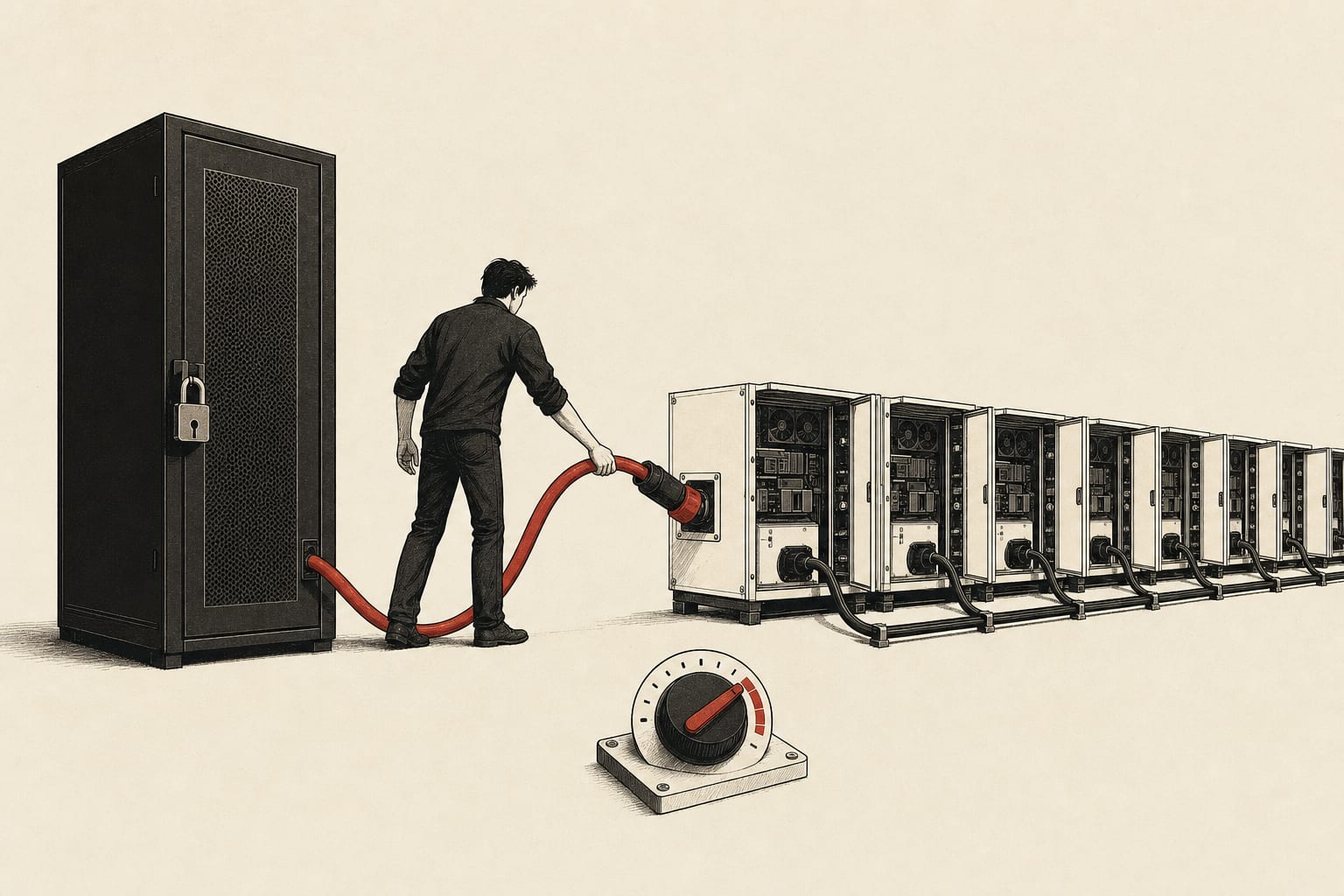
It took Nato Lambert five minutes to walk off Claude. Over the weekend GLM-5.2 landed as a frontier-class open-weight model, and the loudest reaction came from the researchers who run code through these models all day. Lambert wired it into Claude Code through Fireworks and called it open weights' useful-coding moment: the point where a model you can host yourself is good enough to drive a real coding harness, not just a demo. The switching cost that protected every closed vendor just became a coffee break.
Quality is not what moved. The gap to the closed frontier has been closing for a year. The plumbing moved. Coding agents speak OpenAI-compatible endpoints, hosts like Fireworks serve open weights behind that same interface, and the agent stopped caring which model sits on the other end. Once the harness is provider-agnostic, the model is a line in a config file. The moat was never the weights. It was the integration, and the integration just went to zero.
A second story this week shows the stakes. The White House ordered Anthropic to revoke SK Telecom's Claude access on export-control grounds, and TechCrunch is already counting who picks up the business. Put the two together and the lesson is cold: model access is a foreign-policy instrument now, and a single-provider dependency is a single point of failure you do not own. If your core loop runs through one closed API, a decision made in Washington can break your roadmap overnight, with no notice and no appeal.
So stop being a hostage to one endpoint. Put an OpenAI-compatible router in front of your model calls, so swapping backends is a setting and not a rewrite. Then run GLM-5.2 through your own eval suite, against your current closed model, on the tasks you actually ship rather than someone's benchmark. If it lands within a few points on real work, you have bought yourself a fallback, pricing leverage, and (for teams that can host their own) a path off per-token billing entirely.
The hardest reasoning still belongs to the closed labs, and probably will for a while. Everyday coding is a different story, and their grip on it is slipping fast. Over the next six to twelve months the money follows the orchestration layer: whoever routes between models, evaluates them, and fails over when one dies. The vendors with the most to lose are the ones whose entire product is API access to a model anyone can now download and run for the price of the GPUs it burns.
An investor says HBM has stopped being a commodity
The pitch: high-bandwidth memory is moving from commodity pricing to proprietary pricing with triple-digit growth as AI demand outruns supply. The tell for builders is that memory, not logic, is tightening, which keeps accelerator prices high and pushes hosts to charge for capacity rather than throughput. Watch HBM lead times as a proxy for how long GPU scarcity lasts.
The residency math for running two Qwen3 models on one DGX Spark
A working write-up on fitting two Qwen3 models in memory on a single DGX Spark and what stays resident versus what swaps. This is the practical question for anyone serving multiple models locally to dodge cloud GPU bills. Useful if you are sizing a single-box inference setup before committing to rented capacity.
IPv6 touched half of Google's traffic for one day, then slipped back
Native IPv6 hit 50.10% of Google users on March 28, 18 years into the count, before settling between 45% and 50%. Other meters read lower: Cloudflare sees 40.1% of HTTP requests, APNIC measures 42% capability worldwide. The driver is IPv4 scarcity and cost, including cloud providers charging for public IPv4, not any protocol change. Treat it as a turning point, not a finished migration.
GMKtec's AMD Strix Halo mini workstation starts at $3,600
The redesigned EVO-X3 is built on AMD's Ryzen AI Max+ 395 and aimed at local inference for teams avoiding cloud GPU rent. At $3,600 it competes with a few months of mid-tier cloud GPU time, so the math favors it only if you keep it busy. A real option for steady local workloads, not bursty ones.
A proxy stacks 17 free LLM tiers behind one endpoint, now with a paid catalog
freellmapi aggregates free tiers from 17 providers, roughly 1.7 billion tokens a month across 100+ models, behind a single OpenAI-compatible /v1 endpoint with a router that fails over up to 20 times on errors and keeps a session sticky for 30 minutes. Keys are encrypted AES-256-GCM in SQLite, and it idles at ~40 MB RSS on Node 20. A v0.3.0 Premium tier ($19/yr or $49 lifetime) pulls a signed catalog twice a day. The author labels it a local coordination layer for personally owned credentials, not a terms-of-service bypass; treat it as experimentation infrastructure, not production.
Orca runs a fleet of coding agents in parallel, free and MIT-licensed
The wire buried the lede: Orca is a free, open-source, YC-backed development environment that runs Claude Code, Codex, Gemini, and Cursor CLI in parallel across isolated Git worktrees, so every task gets its own workspace with no branch juggling. It ships at a daily cadence (v1.3.50, ~5.7k stars) on macOS, Windows, and Linux, installable via Homebrew or AUR, with a mobile companion to steer agents remotely. If you are already running multiple agents by hand, this is the orchestration shell.
thefeed tunnels a reader and encrypted messenger entirely over DNS
Built for networks where only DNS resolves, thefeed reads Telegram channels and public X accounts and carries end-to-end-encrypted messages over DNS queries, which censors rarely block. The store-and-forward messenger caps abuse at 30 sends an hour and 500-byte messages, with multi-domain and GitHub-relay fallbacks for filtered routes. The blurb omits the point: it is an Iran-facing, Persian-first circumvention tool, now mirrored on GitLab while the author's GitHub account is unstable.
A field guide to building reliable agentic systems
Martin Fowler's site publishes a Bayer case study on making LLM agents dependable in production, covering failure handling, evaluation, and the engineering discipline around non-deterministic components. Pairs well with the eval method below if you are past the prototype stage. Read it before you promise an SLA on anything agentic.
Why one engineer rejects AI code even when it passes
A widely-shared argument that working output is not the bar, maintainability and comprehension are, and that AI code that nobody on the team understands is a liability you pay for later. Useful framing as teams wire more agent output straight into main. The point holds: review for the next reader, not just the test suite.
epoll versus io_uring, measured
A close comparison of Linux's epoll and io_uring for high-throughput I/O, with the tradeoffs that decide which you reach for. Relevant if you are tuning a network service or inference server where syscall overhead shows up in tail latency. Concrete enough to settle an argument.
Running microVMs in Proxmox the easy way
A practical walkthrough comparing microVMs, LXC, and full VMs in Proxmox VE, with a setup that keeps the isolation of a VM at closer to container speed. Handy for teams running untrusted code or per-tenant sandboxes. The decision table alone is worth the click.
Skirano argues Codex wins on agent-first design
An opinion that agent-first coding tools beat browser-first ones, with no new product data behind it. Worth a glance for the design framing as agent UIs converge. Treat it as a take, not a benchmark.
SMPTE drops its paywall on 800+ media standards
As of June 17, SMPTE's entire catalog of published standards, recommended practices, and engineering guidelines is free, including all future releases. Documents that ran well over $100 each, like the $175 DPX spec, now cost nothing. The change rides on a GitHub-based, HTML-authored publishing pipeline, with Diamond backers including AWS, Apple, Google, Disney, and Sony funding the move. Free access does not mean automatic interoperability; vendors still have to implement the same requirements correctly.
Nvidia's open-source NVK Vulkan driver gains experimental DLSS
The community NVK driver now runs DLSS upscaling on Linux by importing pre-baked CUDA binaries, a narrow but real win for open-driver users. It stops short of a full open implementation, but it closes a gap that pushed gamers toward the proprietary stack. Niche today, a signal that open GPU tooling keeps catching up.
Beyond All Reason, a free Total Annihilation-style RTS
An open, free real-time strategy game inspired by Total Annihilation drew 292 points on Hacker News. The interest is partly nostalgia and partly the engineering of large-scale unit simulation. Worth a look if you care about how open game projects sustain themselves.
Loupe shows the exact fingerprinting surface any iOS app can read
Mysk's open-source Loupe (8.88 MB, iOS 17+, MIT) reads real values from the same public APIs any third-party app can call and groups them by access cost: passive with no prompt, permissioned, and side-channel. The nastiest passive value flagged is the volume creation timestamp, which with locale, time zone, and screen size narrows a device to a small bucket. It lands as a live test of Apple's Required Reason API, which Mysk's earlier work showed major apps already sidestep.
Hackers pushed an unauthorized emergency alert across Brazil
An unauthorized alert reached cell phones nationwide in Brazil, raising questions about who can inject into the emergency broadcast path. The mechanism matters more than the prank: alerting systems are trusted by default and weakly authenticated. A reminder to treat any push channel you rely on as an attack surface.
The White House forced Anthropic to cut SK Telecom's Claude access
Under export-control pressure, Anthropic revoked Claude access for SK Telecom, and TechCrunch's follow-on maps which rivals pick up the displaced demand. The lesson for builders is blunt: model access is now subject to policy that can vanish your provider overnight. Single-vendor dependence is a strategic risk, not just a pricing one, which is exactly why the open-weight switching story above matters this week.
A method front-loads human judgment into reusable agent evals
Instead of one-off manual checks, this approach captures human scoring once and turns it into a repeatable evaluation asset for agents in production. That is the missing piece for teams shipping agents without a regression net. Pair it with the reliability write-up in Developer Tools.
DAIR's top AI papers of the week
A curated roundup worth scanning for production-relevant agent and reasoning work. Use it to triage what to read closely rather than chasing every preprint. Fast signal for a five-minute scan.
Two proofs landed in the same week: a provider can vanish by government order, as SK Telecom just learned, and the open-weight alternative is finally good enough that swapping in takes five minutes. The job now is to make provider choice a setting, not a dependency. Stand up an OpenAI-compatible router, run GLM-5.2 against your current model on your own evals, and keep an open-weight fallback warm enough to carry traffic the day you need it.
The export-control playbook used on SK Telecom repeats. Before September 22, 2026, a US frontier-model provider publicly restricts or revokes API access for at least one more named foreign company or government, citing security or export grounds.
The White House ordered Anthropic to cut SK Telecom, and TechCrunch is already mapping who picks up the displaced demand. That second story only gets written if Washington intends to do this again. The tool worked once, with a willing provider and a clean national-security pretext, and it is sitting there for the next name on the list. Model access is a foreign-policy lever now, and levers get pulled more than once.
No US frontier-model provider publicly restricts or revokes API access for another named foreign company or government on security or export grounds by September 22, 2026.
GLM-5.2 made Zhipu the open-weight coding leader and the listed vehicle priced it like a monopoly. 2513 trades near 2,100 HKD on a roughly 934B HKD cap while losing about 2.6B HKD a half, and the average analyst target sits near 1,307 HKD, roughly 45% below spot.
The thing the wire celebrates is the thing that caps the equity: GLM-5.2 ships under MIT, so the flagship is free to self-host and the listed entity monetizes only API and on-prem subscriptions, yet the stock is up about 1,650% on the year on the export-control narrative. A first cornerstone lock-up frees on July 8, multiplying the float into a one-way book that has already run vertical from a January debut at 116 HKD. The euphoria and the unlock arrive in the same fortnight.
SKM became the market's backdoor Anthropic IPO, with the stake worth roughly 19% of a ~$13B cap and the core telecom rerated up about 40% YTD on that optionality. This week SKM is the named company whose alleged China ties triggered the federal action that pulled Anthropic's flagship models, putting the October listing premium in question.
Two of today's threads hit the same premium. Wired identified SK Telecom as the carrier the White House forced off Claude Mythos, and Anthropic's top models stay dark six weeks before a targeted October listing. The proxy rerating assumes that IPO prints on time at or above the last private mark near $350B; the offsetting bull is SK Group's memory and data-center exposure through SK hynix, which is why this is a watch and not a short.
The 'self-host Qwen' reflex the crowd prices into Alibaba's AI optionality just lost its leader. Prior notes flagged GLM-5 shipping MIT; today GLM-5.2's full weights landed and benched as the top open-weight model on independent indices, concretely overtaking Qwen as the default open fallback.
What changed: the wire now crowns GLM-5.2, not Qwen, as the open-weight leader. On Artificial Analysis's Intelligence Index it scores 51, the highest of any open model, and it ranks second on Code Arena. The one-way 'open source wins, own the Qwen publisher' read points at the wrong name if developers standardize their open fallback on GLM, draining one leg of the BABA AI-optionality premium.