Wall Street goes hunting for the next Nvidia and lands on the people who make memory
Wall Street is pricing Micron like the next Nvidia and Lenovo says the memory shortage is permanent. Plus China retakes the supercomputer crown, AI coding agents tricked into installing malware, and the open-model field widens.
Memory is the new bottleneck in artificial intelligence, and this morning Wall Street started pricing the companies that make it like the next Nvidia.
It's Sunday, June twenty-eighth. Here's the rundown: the memory squeeze, a compute map that's shifting east, and an A I agent that got talked into installing malware.
Start with memory. Investors spent two years treating one chip company as the whole A I trade. This week they went looking for the next one and landed on Micron.
Which tells you where the scarcity moved. Every accelerator needs fast memory bolted right next to it, and far fewer companies can make that memory than there are buyers for it.
And the buyers are the richest companies on earth.
The supply side isn't arguing. A Lenovo exec said this week the shortage everyone's calling RAMageddon is permanent. His words: it will never be like it was last year.
That's a vendor telling its own customers to stop waiting for prices to come back down.
And it isn't only datacenters. Memory is now one of the most expensive parts of building any machine. The same squeeze that sets a hyperscaler's bill decides whether a small shop can afford thirty-two gigs this quarter.
So what do you actually do with that if you're building?
Stop treating memory as a rounding error. Price it as a first-order line, lock supply where you can, and read every accelerator roadmap as a memory roadmap too. The compute story just became a memory story.
On the wire, the compute map shifted. China retook the top of the global supercomputer rankings with a system called LineShine, its first number one since 2018.
Under export controls, which is the part that matters. The restrictions are steering where the frontier gets built, not whether it gets built.
Same week, Loongson shipped a homegrown sixteen-core server chip on its own architecture. Forty watts, aimed at cheap general-purpose servers.
Not a frontier part, and that's the point. A domestic stack for the boring server middle that no export policy can switch off.
Security desk. Mozilla's research team showed a coding agent can be walked into installing malware from a repository that looks completely clean.
They didn't break the model. They used its helpfulness against it. If you let an agent run setup steps from a repo, that repo is now part of your threat model.
And there's an open request to let OpenAI's coding tool exclude sensitive files that's climbing Hacker News.
Same worry from the other side. When an agent can read your whole tree, what it can see is a question you answer before you run it, not after.
Models. The open field keeps widening. Zyphra, Cohere, and Poolside all added to the open-weights pile this week.
The headlines go to the closed labs, but the buildable middle is getting deeper every month. That's the part that actually changes what you can ship tonight.
And a sharper one. Prosecutors entered a defendant's ChatGPT logs as evidence in the Palisades fire trial.
Whatever the verdict, the precedent is the story. Chatbot history is discoverable now. What people type into an assistant carries the same weight as any other record.
The tape. Three prints this morning. Long Micron, long S K Hynix, both on the memory squeeze, and watching S M I C on China's domestic buildout.
Highest conviction is the memory pair. The falsifier is simple: a supply glut or an A I spending pullback that sends memory prices down over the next two quarters. Horizon, six months.
And the tape is the desk's scorecard, not advice.
Quick break — two from the desk.
One we know well: vote dot direct. If you're on an H O A or a board, it runs your elections digitally — secure, verifiable, no paper, no clipboard in the lobby. Point your council to vote dot direct.
And if this is your ten minutes of A I for the day, get the written edition too. The full wire, free, every morning — leave your email at nextbig dot dev.
Quick hits. I B M detailed a sub-one-nanometer transistor meant to carry chip scaling into the 2030s.
The Trump administration cleared more than a hundred U S companies and agencies to use Anthropic's Mythos five.
OpenAI poached Uber's India chief to run its biggest market outside the U S.
And one for builders: OpenAI says its internal coding agent's output grew more than fifty times in research this year.
That's the rundown. Our call: within six months the A I hardware story stops being only about G P Us. A major memory maker posts a quarter growing faster than Nvidia's datacenter business, and memory supply shows up by name in a hyperscaler's spending guidance.
Proves us wrong if neither happens by the end of December. We settle it in public when the date comes. See you tomorrow.
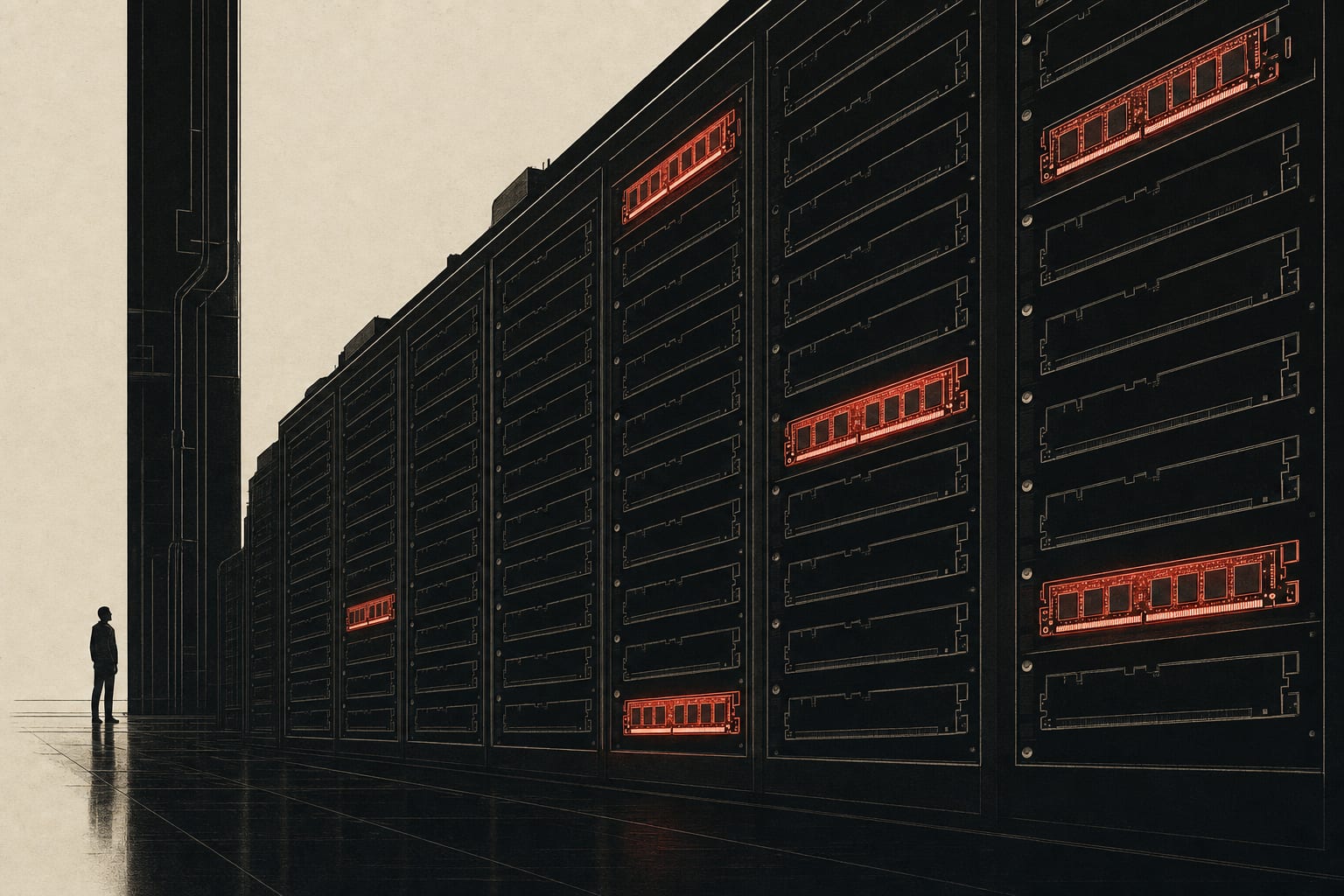
Wall Street spent two years treating one company as the entire AI trade. This week it went looking for the next one and stopped at the memory makers. Micron, which sells DRAM and the high-bandwidth memory stacked onto every AI accelerator, is now the name investors reach for when they want Nvidia-shaped returns at a lower entry price. The pitch is simple. Every accelerator that ships needs memory around it, there are far fewer memory suppliers than there are buyers, and the buyers are the most cash-rich companies on earth.
The supply side agrees. At ISC 2026 this week, a Lenovo executive said the memory and storage shortage the industry started calling RAMageddon is not a spike but the new baseline. His words were that it will never be like it was last year. That is a hardware vendor telling its own customers to stop waiting for prices to fall back.
It is not only a datacenter problem. Memory has quietly become one of the most expensive parts of building any computer, and the global DRAM shortage now reaches all the way down to someone speccing a single desktop. The same constraint that sets a hyperscaler's buildout cost decides whether a small shop can afford 32 gigabytes this quarter.
The reason memory became the choke point is structural. Training and serving large models is bound by how much fast memory sits next to the compute as much as by the compute itself. Weights, context, and KV caches all live in memory, and high-bandwidth memory is hard to fabricate and concentrated among a handful of suppliers. When accelerator demand went vertical, the scarce input was never going to be only the logic die. It was going to be the thing bolted next to it.
For anyone planning hardware or forecasting infrastructure cost, the cheap-memory assumption is the one to retire this quarter. Treat memory price and availability as a first-order line in the budget, not a rounding error. Lock supply where you can, size context windows and batch jobs with the memory bill in view, and read every accelerator roadmap as a memory roadmap too. The compute story just became a memory story, and the people who sell it already know it.
China retakes the supercomputer crown with LineShine, its first TOP500 number one since 2018
Despite trade restrictions, China has reclaimed the world's fastest supercomputer for the first time since 2018. A system called LineShine pushed the US El Capitan out of the top spot on the TOP500 ranking. The win arrives while export controls are meant to be slowing exactly this, which suggests the restrictions are reshaping where the frontier gets built more than whether it gets built.
China's Loongson ships a homegrown 16-core server CPU on its own architecture
Loongson unveiled the 3C3000 on June 26, a 16-core server processor built on its in-house LoongArch architecture. It is a 40-watt chip with DDR4 ECC and 32 PCIe lanes aimed at cheap general-purpose file, database, and web servers. It is not a frontier part, and that is the point: a domestic stack for the unglamorous server middle, built so it does not depend on anyone else's export policy.
Mozilla's 0din team shows AI coding agents can be talked into installing malware from 'clean' repos
Researchers at Mozilla's 0din group demonstrated that a coding agent like Claude Code can be exploited through its own helpfulness, walked into installing malware from a GitHub repository that looks clean. The attack does not break the model so much as use its eagerness to be useful. If you let an agent run setup steps from a repo, that repo is now part of your threat model.
A request to let OpenAI Codex exclude sensitive files is still open, and builders noticed
An issue asking for a way to stop OpenAI's Codex from reading sensitive files remains open, and it climbed Hacker News to 132 points. It is the same worry as the 0din attack from the other direction: when an agent has broad read access to your tree, what it can see becomes a question you answer before you run it, not after.
The open-model field keeps widening: Zyphra, Cohere, and Poolside add to the pile
Nathan Lambert's latest open-artifacts roundup makes a quiet point. A year ago open releases came from a short list of labs, and now Zyphra, Cohere, Poolside and a growing crowd are shipping a wide range of open models. The frontier headlines go to the closed labs, but the usable, buildable middle is getting deeper and more competitive every month.
Prosecutors entered ChatGPT logs as evidence in the Palisades fire trial
In the arson case tied to one of LA's deadliest wildfires, prosecutors used a defendant's ChatGPT logs alongside location data to build their case. Whatever the verdict, the precedent is the story: chatbot history is now discoverable evidence, and what people type into an assistant carries the same weight as any other record.
Two kinds of scarcity ran through the day. Memory got expensive enough that Wall Street started pricing Micron like Nvidia and Lenovo called the shortage permanent. Compute got contested enough that China retook the supercomputer crown and shipped a server CPU on its own architecture. The thread for builders is the same in both: the inputs you used to take for granted, cheap memory, available chips, and the belief that a clean-looking repo is clean, are now things to price, secure, and verify before you build on them.
Within six months, the AI-hardware story stops being a GPU story alone. At least one major memory maker (Micron or SK Hynix) reports a quarter in which data-center memory revenue grows faster year over year than Nvidia's data-center segment, and memory supply shows up as a named constraint in at least one hyperscaler's capex guidance.
Lenovo is telling customers the shortage is permanent, Wall Street is already repricing Micron as the next Nvidia, and high-bandwidth memory is co-scarce with the accelerators it ships beside while having far fewer suppliers. When the tightest-supply input is also a high-margin one, the money and the language tend to follow it.
If, by December 28, 2026, no major memory maker has reported data-center memory revenue growing faster year over year than Nvidia's data-center segment, and no hyperscaler has named memory supply as a capex constraint in its guidance, the call is wrong.
The AI-hardware trade is rotating from the logic die to the memory beside it. Micron sells the DRAM and high-bandwidth memory every accelerator needs, and supply is tight enough that Lenovo is now calling the shortage permanent.
Wall Street is openly hunting for the next Nvidia and naming Micron. HBM is co-scarce with accelerators and has few suppliers, so pricing power sits with the makers while demand stays vertical.
Same memory-cycle thesis at the HBM leader. If fast memory is the scarce layer of the AI stack, the dominant high-bandwidth-memory supplier captures the largest share of the repricing.
Vendor commentary frames the DRAM and storage shortage as structural, not a spike. HBM demand tracks accelerator shipments, which are not slowing, and SK Hynix leads that market.
China just retook the TOP500 top spot with LineShine and shipped a homegrown LoongArch server CPU, both under export controls. Domestic compute is being built regardless of restrictions, and SMIC is the foundry behind that stack.
A number-one supercomputer ranking and a domestic server chip show a working homegrown pipeline. Export controls appear to be redirecting China's buildout inward rather than stopping it.