Nadella spent his Sunday telling enterprises they pay for AI twice, once in money, once in the proprietary knowledge that leaks out through prompts and corrections. The biggest reseller of frontier AI just sided with the buyers against the labs it hosts
Satya Nadella's Sunday essay "The Reverse Information Paradox" (3.7M+ views) tells enterprises they pay for AI twice: once in money, once in the proprietary knowledge that leaks out through prompts, tool traces, and corrections, "intelligence exhaust." The desk reads it as positioning: Microsoft, the biggest reseller of frontier AI, siding with buyers against the labs it hosts, with prescriptions (owned traces, private evals, in-tenant tuning, orchestration layers) that map onto products. Around it, the weekend priced the harness: Claude Code's 33,000-token overhead vs OpenCode's 7,000; Ploy's Opus-to-GPT-5.6 migration (2.2x faster, 27% cheaper, after real plumbing); a proxy that runs Claude Code on rival subscriptions; Apple's on-device SpeechAnalyzer beating Whisper.
The most read thing in AI this weekend was a warning label. It's Monday, July thirteenth, and the man who sells more AI than anyone says you're paying for it twice.
Satya Nadella spent Sunday telling three point seven million readers that the real price of AI isn't the tokens. It's the proprietary knowledge you feed a model to make it useful. The prompts, the tool traces, and above all the corrections. He calls it intelligence exhaust, and says it leaks a company's know-how trace by trace.
Weigh the source. Microsoft resells more frontier AI than anyone and bankrolled OpenAI's rise. When that company's chief executive tells enterprises to keep their evaluations private, own their traces, and put a routing layer between themselves and any single vendor, that isn't a blog post. That's positioning.
And every prescription in it happens to be something Microsoft sells, or is about to. The warning is also an advertisement. It can be both. Either way, the biggest distributor in AI just sided with the buyers against the labs it hosts.
The same morning, someone priced the harness itself. Claude Code sends roughly thirty-three thousand tokens of scaffolding before your prompt even arrives. A leaner tool sends seven thousand. And a production team that migrated its agent to GPT-5.6 came out twenty-seven percent cheaper, after rebuilding half its plumbing, because the new model invented values for every optional field it saw.
Same lesson at both ends. The token price is not the bill.
To the tape. We hold the Micron long, unchanged on a quiet memory day, and we hold the Nvidia watch.
And we re-open a watch on Microsoft itself. When a platform starts teaching its customers to distrust its most important supplier, the product that monetizes the distrust is usually already in the pipeline.
The tape is the desk's scorecard, not advice.
Our call: within six months, Microsoft ships a named enterprise product built on exactly that essay. Private evaluations, customer-owned traces, tuning inside your own tenant, marketed against frontier-lab knowledge leakage.
What proves us wrong is January with the essay still just an essay. Watch the product pages, not the manifestos.
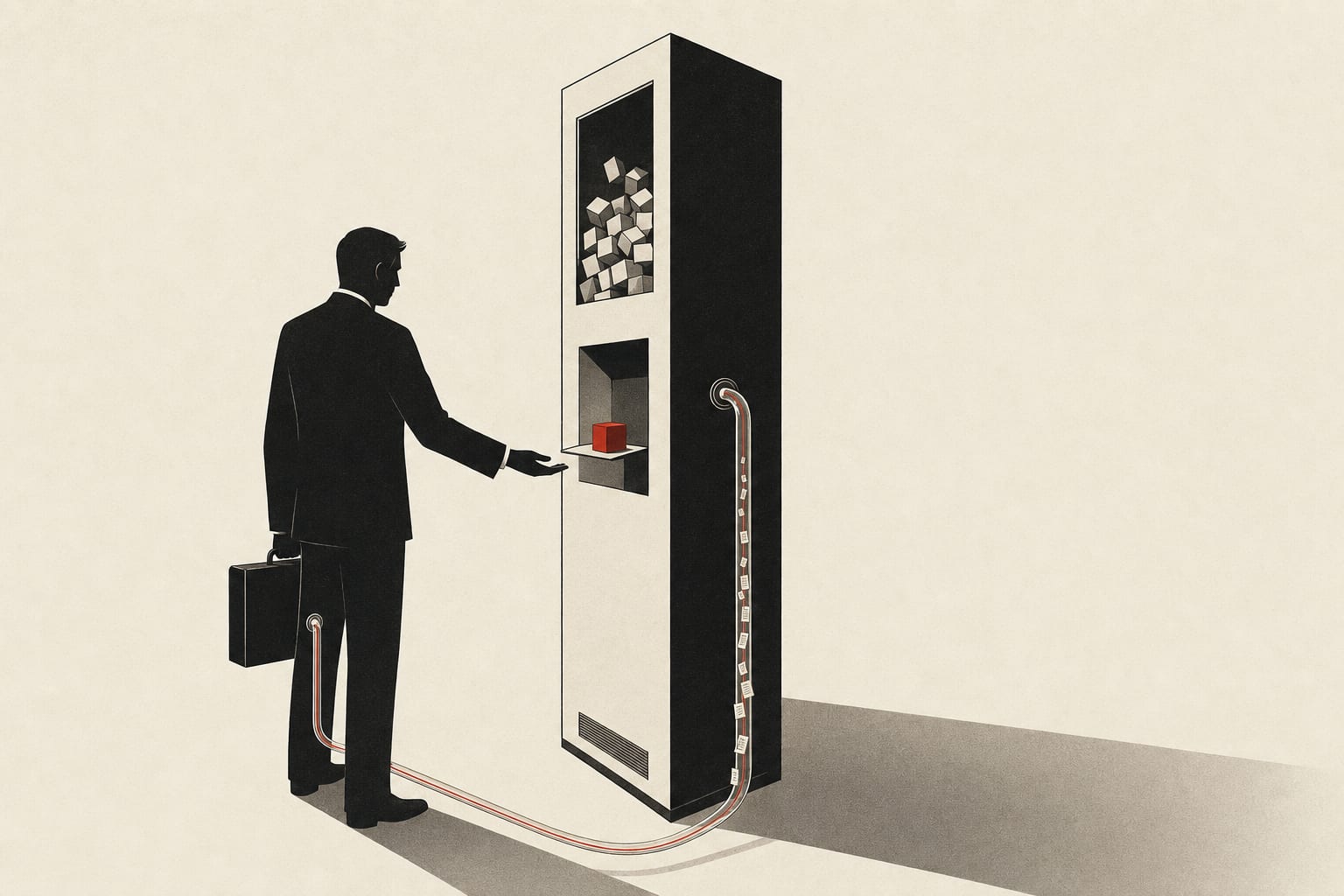
Nadella spent his Sunday telling enterprises they pay for AI twice — once in money, once in the proprietary knowledge that leaks out through prompts and corrections. The biggest reseller of frontier AI just sided with the buyers against the labs it hosts
The most-read piece of writing in AI this weekend was not a paper or a model card. It was an essay by Satya Nadella, posted to X on Sunday and past 3.7 million views by this morning, telling the companies that buy AI they are being quietly overcharged. Not on the token price. Nadella's line is that you pay for intelligence twice: "once with money, and again with something even more valuable: the proprietary knowledge you must reveal to make that intelligence useful."
He builds it on a fifty-year-old piece of economics. Kenneth Arrow described the original information paradox: a buyer cannot value information without seeing it, and once they have seen it they own it, so the seller carries the disclosure risk. AI inverts the trade. The model-seller discloses nothing, and the buyer, to make the model useful, hands over the prompts, the tool traces, and above all the corrections — every fix an employee makes when the model gets the company's business wrong. Nadella calls this "intelligence exhaust," and his sharpest claim is that the corrections are the crown jewels: distilled institutional know-how no competitor could purchase, leaking out "trace by trace" until the vendor knows the business well enough to compete with it.
Now weigh the source, because the source is the actual story. This is not a privacy scholar. It is the chief executive of the company that resells more frontier AI than anyone alive and bankrolled OpenAI's rise, writing in public that the labs' models can end up competing with the customers whose corrections trained them. The Register read the post as Microsoft turning hostile on the frontier labs, and the prescription section reads like a roadmap: keep your evaluations private, retain ownership of your traces and feedback, tune models inside your own tenant boundary, and put an orchestration layer between you and any single vendor so you can leave.
Grant the conflict openly, because it is load-bearing. Every one of those prescriptions is something Microsoft sells, or is positioned to sell by the end of the year. "Keep your data inside your own tenant" is an Azure pitch as much as a principle, and a warning about other people's models lands conveniently from a company that has spent the spring leaning harder on its own. None of that makes the warning wrong. It makes it a tell: the biggest AI distributor on earth has concluded that enterprise fear of knowledge leakage is now worth more than frontier-lab goodwill, and is spending its CEO's byline to say so.
For anyone building, the essay reads like this month's briefings retyped on Fortune-500 letterhead. Design for exit; keep a second model wired in; treat the routing layer as the part you own — the same argument as our essay on making the model easy to fire, now with 3.7 million readers. What Nadella adds is the second column in the ledger. Alongside what the vendor bills you, count what you hand back. The token price of frontier AI fell all month. The knowledge you pipe in to make it useful never got cheaper, and as of Sunday the man who sells the most of it is telling you to meter that side too.
Claude Code spends 33,000 tokens before it reads your prompt; OpenCode spends 7,000
A measurement making the rounds prices the harness itself. Before your first word reaches the model, Claude Code has already sent roughly 33,000 tokens — about 24,000 of tool schemas across 27 tools, another 6,500 of system prompt, plus injected reminders — where the leaner OpenCode sends about 7,000. The sharper finding is cache behavior: Claude Code's prefix regenerated mid-session, once rewriting its full ~43,000-token prefix at premium cache-write rates, 53,839 cache tokens written against OpenCode's 1,003 on the identical task. Add a real team's instruction files and MCP servers and the baseline grows by another 20,000 tokens per request. None of this appears on a price sheet, which quotes dollars per million tokens and says nothing about how many tokens the scaffolding burns before the work starts.
A production agent moved from Opus 4.8 to GPT-5.6 and came out 2.2x faster and 27 percent cheaper — after the team rebuilt half its plumbing
Ploy, which runs an agent that builds production marketing sites, published full receipts on a model migration: per-build time fell from eight minutes to three minutes forty-two, cost from $3.06 to $2.22, and their visual-quality score improved. The interesting part is what broke on the way. GPT-5.6 filled in all 25 optional tool parameters with invented values where Opus had left them empty, and 52 to 64 percent of file reads returned nothing because an invented offset of zero was treated as real. The fixes — nullable-required parameters, workspace-scoped cache keys, self-contained reasoning replay — were infrastructure work, not prompt tweaks. Two Sundays ago the complaint was Anthropic's newest models inventing fields in third-party tools; the mirror image now ships from OpenAI. Each lab's flagship runs cheapest inside its own harness, and switching is real engineering with a measurable payback.
A local proxy runs Claude Code on your ChatGPT, Kimi, or Grok subscription
One of the weekend's most-starred repos is a small local server that speaks the Anthropic API on one side and someone else's subscription on the other, so Claude Code — the harness — runs against the ChatGPT, Kimi, Cursor, or Grok plan you already pay for. Treat it as a signal more than a recommendation: flat-rate terms of service were not written for this, and a provider can close the door any morning. The direction is what matters. The harness people like is decoupling from the model it was built to sell, from the bottom up, one weekend proxy at a time — the same unbundling Nadella's orchestration-layer advice describes from the top down. When the tool and the model separate cleanly enough that a hobby project can swap the engine, the leverage in every renewal conversation moves to the buyer.
Apple's new on-device speech API beats Whisper on accuracy and speed, in a published benchmark
A transcription startup benchmarked Apple's new SpeechAnalyzer API — the one shipping with iOS 27 — against the models most builders default to, across 5,559 LibriSpeech utterances, and published every raw transcript for checking. On clean English speech it posted a 2.12 percent word error rate against Whisper Small's 3.74 and the old Apple API's 9.02; on noisy audio, 4.56 against 7.95; and it ran about three times faster than Whisper Small, entirely on the device. The stated caveats are scope: English read speech, 30 locales against Whisper's hundred-plus languages, no meeting-room audio. It belongs in today's edition for one reason. This is the keep-it-in-the-building option arriving as an operating-system default — the audio never leaves the phone, which, on the day enterprises are being told to watch what they feed the cloud, is the feature.
The model got cheap; this morning's wire prices everything around it. The overhead is real (33,000 tokens before your prompt arrives), the migration is real (Ploy bought a 27 percent saving with weeks of plumbing), and the second invoice is real too — Nadella, of all people, told 3.7 million readers that the knowledge you feed a model to make it useful is the part you never get back. The practical ledger for the week: know what your harness spends before the work starts, keep a second engine wired in the way the weekend's proxy crowd already does, and start counting what leaves the building alongside what it costs. The vendor bills the first column. Nobody yet bills the second, which is exactly Nadella's point — and, given who is making it, probably his next product.
Within six months, Microsoft ships a named enterprise product or tier built on the architecture of Nadella's essay — private evaluations, customer-owned interaction traces and feedback, model tuning inside the customer's own tenant boundary — and markets it explicitly as protection from frontier-lab knowledge leakage. The essay is a roadmap wearing the costume of a warning.
Chief executives of multi-trillion-dollar companies do not publish 3.7-million-view essays about a partner's business model as a public service. Microsoft resells more frontier AI than anyone, watched OpenAI turn from dependency into rival, and owns the one asset the labs cannot copy: the tenant boundary enterprises already trust. Every prescription in the post — owned traces, private evals, in-tenant tuning, an orchestration layer — maps onto a product Microsoft can assemble from parts it already ships. When the distribution king starts teaching buyers to fear the supplier, the product that monetizes the fear is usually already in the pipeline.
If, by January 13, 2027, Microsoft has shipped or announced no named product or tier marketed on interaction-exhaust ownership and in-tenant knowledge retention, and the essay stands as commentary with no commercial follow-through, the call is wrong.
We hold the Micron long through a day with no memory headlines, which is itself worth a line: the position no longer needs daily confirmation. Nothing on today's wire touches the supply picture — HBM and leading-edge DRAM stay tight into 2027 with pricing power at the seller — so the position and its conviction stand where Saturday left them, with the named reversal risk still the thing we watch.
AI capacity buildouts keep buying memory faster than fabs can add it, and the makers guide tight supply into 2028. The offset is unchanged and dated: memory always over-corrects, three-year fab lead times land all at once, and the boom-bust warning The Register printed Sunday remains our own falsifier in someone else's typeface.
We hold the Nvidia watch, and today's input is second-order but real: Nadella pushing every enterprise toward multi-vendor orchestration erodes nobody's GPU order book this quarter, but a routing layer that can switch models cheaply is a routing layer that will eventually learn to switch silicon. The question on this watch stays what it was — how much of near-term demand is genuine end-use versus vendor-financed neoclouds — and now, how sticky the demand is once the software above it goes portable.
Agentic and multimodal workloads keep real accelerator demand rising. The offsets: a meaningful slice of near-term demand runs through leveraged neoclouds Nvidia helps fund, and the orchestration-layer movement Nadella just blessed makes every layer under it easier to swap.
We re-open the Microsoft watch on the essay, because it reads like positioning ahead of product. Microsoft is simultaneously OpenAI's landlord, its largest distributor, and — per its own chief executive this weekend — the loudest voice telling enterprises to fear what they feed frontier labs. The watch is for the conversion: a named product that turns the warning into revenue, in-tenant tuning and owned-exhaust guarantees sold against the labs Microsoft hosts. If it ships, the platform is monetizing distrust of its own supplier, which is as clean a moat as this market currently offers.
The enterprise fear Nadella named is real, and regulated buyers already act on it — the on-prem thread we filed July 3. Microsoft can assemble the fix from existing Azure parts faster than any lab can rebuild trust. The offset is that OpenAI remains Microsoft's growth story, and open hostility risks the partnership that built the position.